Fair Share, NIMBY, and our Values

The Realities of Creating Quality Transitional Housing in New York City
At Westhab, we aren’t in the homelessness business. We’re in the ending homelessness business.
We build high-quality, affordable housing that our community sorely needs. In recent years, we’ve expanded our footprint across New York City—bringing new developments to the Bronx, Brooklyn, and Upper Manhattan—but even with that growth, Westhab and our many colleagues in the affordable housing sector simply can’t produce new housing fast enough, and homelessness persists in our communities.
So, we need safe, well-run places—shelters—for our neighbors who are down on their luck.
Homeless shelters don’t create homelessness. Homelessness exists due to economic realities. What shelters do is bring people indoors and connect them to services, jobs, and ultimately, permanent housing. New York does this as well as any expensive big city in America, with only about 5% of the homeless population being unsheltered.
The pushback to shelters is outsized compared to their actual impact. After opening, our shelters deliver the professional services they are intended to deliver. By providing an effective solution to homelessness, shelters benefit the entire community.
Yet, no neighborhood volunteers to open more shelters.
The best solution is the one New York has already committed to: the “Fair Share” principle. A simple idea,—every community district contributes to meeting the city’s shelter needs so that no single neighborhood carries a disproportionate burden. Fair share promotes equity by allowing families experiencing homelessness to remain close to their schools, jobs, and support networks.
But more than 30 years after its adoption into the City Charter, implementation remains largely uneven. Neighborhoods like the South Bronx, central Brooklyn, and parts of Harlem are home to more shelters per capita than wealthier districts. Just look at the Bronx, where 84 of the 129 shelters in the borough — or 65% of the total — are located in just four of the borough’s 12 community districts. Years of political resistance, legal loopholes, and community pushback too often succeed in keeping shelters out of high-opportunity neighborhoods.
Westhab has been a leader in this effort, helping to create thoughtfully designed, professionally managed shelters in communities that have historically been resistant to them. That work isn’t easy, and we’ve taken our lumps in various communities throughout the City along the way. But we continue to do what’s right—because lasting change can only happen when we stand firm in our values. Homelessness isn’t an anomaly—it’s part of every city. It’s a reality, and we must answer it with compassion, not ignore or push it away.
Why are we surprised in the first place that some of our neighbors fall behind in a place with the cost of living of New York? Many people are employed full-time, filling essential jobs in our economy—home health aides, custodians, delivery workers—who simply can’t afford market rent. They need our support, not our judgment.
We need to shed the stigma about who the homeless are. They are our neighbors. They are us—our family and friends—maybe one lost job or one unexpected medical bill away from losing their home. Let’s strive for a city where every New Yorker has a place to call home. And in the meantime, let’s accept and embrace temporary homes—yes, shelter—while we continue the effort to create more homes that working-class people can actually afford.
We can and must do better in showing our humanity—and in living up to our values as New Yorkers. Support new shelters in your neighborhood. Speak up at community meetings. Donate, volunteer, advocate. It takes all of us.
This work isn’t easy, but I believe Westhab and New Yorkers are built for it. At Westhab, we’re in it for the long haul because it’s about doing what‘s right, not what’s easy, until every New Yorker has a place to call home.
More Articles
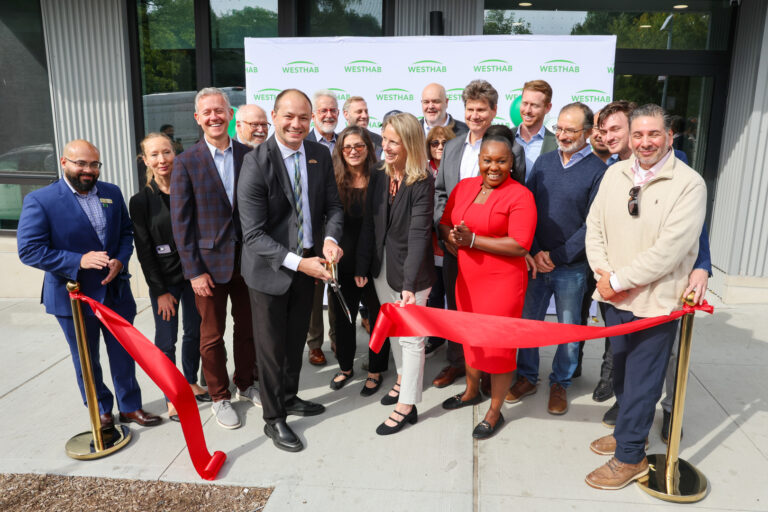
Westhab Opens Van Cortlandt Men’s Rapid Rehousing Center in the Bronx
Read More >>